

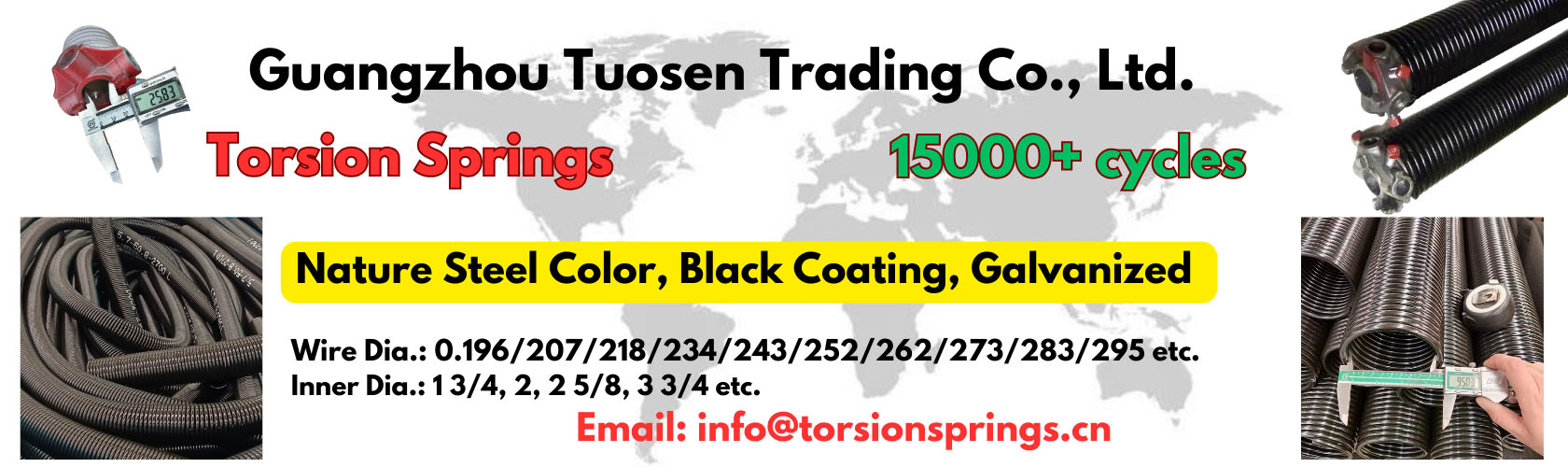
Types of surface finishing options available for torsion springs.
The choice of surface finish depends on factors such as the material used, desired appearance, corrosion resistance requirements, and the specific application. Here are some commonly used surface finishing methods for torsion springs:
1. Zinc Plating: Zinc plating, also known as galvanizing, involves applying a thin layer of zinc coating to the surface of the spring. It provides corrosion resistance and can also enhance the appearance of the spring.
2. Powder Coating: Powder coating involves applying a dry powder to the surface of the spring and then baking it to create a durable and protective finish. It is available in a wide range of colors and offers good corrosion and abrasion resistance.
3. Electrophoretic Coating: Electrophoretic coating, also known as e-coating or electrocoating, uses an electric current to deposit a coating on the spring's surface. It provides excellent corrosion resistance and can offer uniform coverage even in complex shapes.
4. Passivation: Passivation is a chemical treatment that removes contaminants from the surface of stainless steel springs and improves their corrosion resistance. It typically involves using an acid solution to create a passive oxide layer on the surface.
5. Black Oxide Coating: Black oxide coating is a conversion coating that produces a black, corrosion-resistant layer on the surface of the spring. It provides some lubricity and can be used for aesthetic purposes.
6. Nickel Plating: Nickel plating involves depositing a layer of nickel on the surface of the spring. It provides corrosion resistance, improves wear resistance, and can offer a decorative finish.
7. Shot Peening: Shot peening is a mechanical surface treatment that involves bombarding the spring's surface with small metal or ceramic particles. It helps improve the spring's fatigue life, strength, and resistance to stress corrosion cracking.
8. Painting: Painting the surface of the spring using appropriate paints or coatings can provide both protection and an appealing appearance.
The choice of surface finishing method depends on the specific requirements of the application and the desired properties of the torsion spring. Consulting with a professional spring manufacturer can help determine the most suitable surface finishing option for your specific needs.